
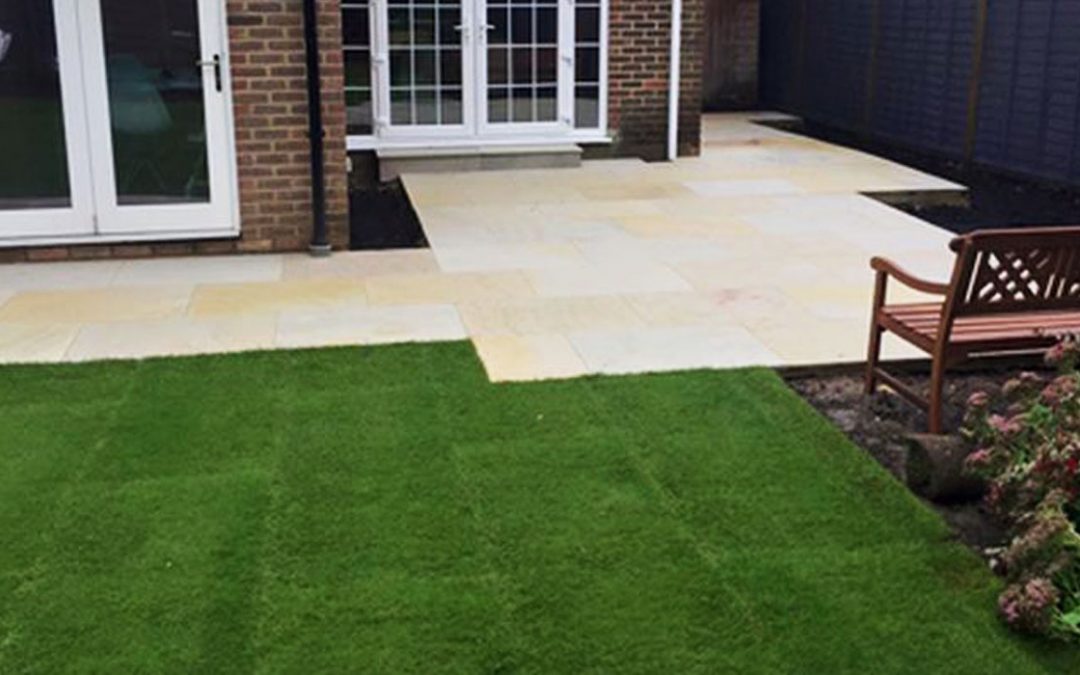
PMB Paving & Landscapes is the leading patio contractor in Harlow, delivering expertly installed porcelain, sandstone, and limestone patios built for Essex clay soil. With reinforced 150mm+ MOT Type 1 sub-bases, SuDS-compliant drainage, and premium craftsmanship, we create patios that stay level, durable, and beautiful across Church Langley, Old Harlow, Potter Street, and CM17–CM20.
Why Does the “Harlow Factor” Matter for Your Patio?
Harlow’s heavy clay soil means patios need stronger foundations than standard UK installations.
Choosing patio contractors in Harlow is not simply about selecting paving slabs, it is about understanding the ground beneath them.
Much of Harlow sits on dense London Clay, a soil type known for significant shrink-swell movement. During dry Essex summers, the clay contracts. In wetter winters particularly in areas closer to the River Stort, it expands again. This repeated movement causes many poorly installed patios to crack, sink, lift, or become uneven.
This is especially common in CM17 – CM20 postcodes, including Church Langley, Potter Street, and Old Harlow, where many homeowners inherit patios laid with inadequate sub-bases by budget installers.
At PMB Paving & Landscapes, we design every patio around what we call the Harlow Foundation Standard:
-
Minimum 150mm+ MOT Type 1 crushed granite sub-base
-
Professional compaction in multiple layers
-
High-density geotextile membrane
-
Full wet mortar bed installation
-
Proper drainage falls away from the property
This prevents movement, weed penetration, frost damage, and the “lifting” effect so common across older Harlow gardens.
What Is the Harlow Clay Expansion Factor?
Essex clay expands and contracts dramatically, so patios require deeper excavation and stronger support.
The Harlow Clay Expansion Factor refers to the movement caused by seasonal moisture changes in London Clay soil.
In simple terms:
-
Summer heat dries the clay → soil shrinks
-
Winter rainfall rehydrates the clay → soil expands
This movement creates upward pressure known as clay heave, which pushes against paving foundations from below.
If your patio sits on only 75–100mm of sub-base as many do, it will eventually:
-
Lift unevenly
-
Crack at joints
-
Develop rocking slabs
-
Create standing water problems
This is why professional contractors working in Harlow should always install:
Minimum Recommended Build-Up
-
200mm+ total excavation
-
150mm+ compacted MOT Type 1
-
Geotextile membrane
-
40mm full mortar bed
-
Primed paving slabs
This approach aligns with best-practice principles under BSI guidance for paving design and ensures long-term structural performance.
In short: your patio is only as good as the ground preparation beneath it.
Which Patio Material Is Best for Harlow Homes in 2026?
Porcelain leads for modern homes, while sandstone remains ideal for character properties.
Material choice should reflect both your home style and the realities of Harlow’s climate.
Why Is Porcelain Paving the 2026 Standard?
In modern developments across Church Langley and Newhall, porcelain paving has become the first-choice material for homeowners seeking low maintenance and clean contemporary design.
Benefits of Porcelain Patios
Zero Porosity
Porcelain absorbs almost no water, which means:
-
Less moss and algae growth
-
No staining from leaf fall
-
Reduced frost damage in winter
This is particularly valuable in shaded Essex gardens where damp conditions are common.
R11 Anti-Slip Protection
Modern outdoor porcelain typically features R11 slip resistance, making it safer during icy mornings and wet autumns.
Premium Visual Finish
Porcelain creates a seamless transition between indoor kitchens and outdoor entertaining spaces, perfect for modern garden design.
Long-Term Value
Although initial costs are higher, maintenance costs are significantly lower than natural stone alternatives.
Why Do Homeowners in Old Harlow Prefer Indian Sandstone?
For period homes, cottages, and traditional landscapes in Old Harlow, sandstone remains a timeless choice.
Benefits of Indian Sandstone
-
Natural texture and colour variation
-
Warm, traditional appearance
-
Strong long-term durability
-
Excellent for heritage-style gardens
We only install calibrated sandstone (typically 22mm thickness) to ensure perfectly level laying and professional results.
Ethically sourced stone also remains a priority for responsible landscaping.
Is Limestone a Good Alternative?
Yes, particularly for homeowners wanting anthracite, charcoal, or contemporary grey tones without choosing porcelain.
Limestone offers:
-
Smooth modern aesthetics
-
Strong structural durability
-
Premium finish for statement patios
It does require sealing and slightly more maintenance than porcelain but delivers outstanding visual impact.
Comparing Patio Materials for Harlow Gardens
| Material | Durability on Clay Soil | 2026 Style Rank | Maintenance | Best For |
|---|---|---|---|---|
| Porcelain | Exceptional | #1 | Very Low | Modern Harlow Homes |
| Indian Sandstone | High | #2 | Medium | Traditional Cottages |
| Limestone | High | #3 | Medium | Contemporary Grey Designs |
Do You Need Planning Permission for a Patio in Harlow?
Usually no, but drainage rules matter more than ever in 2026.
Most patios fall under Permitted Development, meaning formal planning permission is not usually required.
However, there are important exceptions.
You should check requirements if:
-
Your property is in Old Harlow Conservation Area
-
Significant excavation affects boundaries
-
Drainage impacts neighbouring land
-
Surface water drains to public highways or sewers
Guidance from Harlow Council Planning and Building Control should always be reviewed before major works.
At PMB Paving & Landscapes, we help homeowners assess this before installation begins.
Why Does SuDS Compliance Matter in 2026?
Drainage is now as important as design.
As rainfall events become more intense across Essex, impermeable patios contribute to local flash flooding especially around lower-lying areas near the River Stort.
That is why Sustainable Drainage Systems (SuDS) are increasingly important.
The Environment Agency guidance on surface water management strongly supports keeping rainwater on-site rather than sending it to overloaded drainage systems.
Our 2026 Drainage Protocol Includes:
1. Correct Falls
We build every patio with a minimum 1:80 fall away from the house.
2. Linear Drainage Channels
Discrete ACO drains collect water efficiently without compromising appearance.
3. Soakaways
Rainwater is redirected into private soakaways rather than public drainage systems.
4. Permeable Sub-Base Options
Type 3 sub-base is used where resin-bound or permeable paving is required.
This protects your property and helps reduce flood pressure across Harlow neighbourhoods.
What Is the 2026 Biodiversity Net Gain Recommendation for Residential Gardens?
Essex homeowners are increasingly encouraged to support biodiversity through domestic landscaping.
While Biodiversity Net Gain is primarily associated with larger developments, the 2026 residential recommendations promote:
-
Pollinator-friendly planting
-
Native planting borders
-
Rain gardens
-
Reduced impermeable surfacing
-
Wildlife-friendly drainage design
Advice from Essex Wildlife Trust supports creating gardens that improve local ecosystems rather than removing them.
This is why we often combine patios with:
-
Permeable borders
-
Wildlife planting zones
-
Soft landscaping edges
-
Gravel drainage margins
-
Rainwater absorption beds
A beautiful patio should enhance nature not fight against it.
What Is PMB’s 10-Point Installation Checklist?
Professional patio construction should follow a strict process not shortcuts.
The PMB Quality Guarantee
Soil assessment for your specific Harlow postcode
Minimum 200mm excavation depth
High-density geotextile membrane installed
150mm+ MOT Type 1 fully compacted
No spot bedding full wet mortar bed only
Porcelain slabs primed using SBR/polymer slurry
Resin-based frost-resistant jointing compound
Verified 1:80 drainage fall
Full site clean-up and licensed waste removal
10-year structural guarantee against movement
This is the difference between a patio that lasts 3 years and one that lasts 20+.
Frequently Asked Questions About Patio Contractors in Harlow
How Much Does a Porcelain Patio Cost in Harlow in 2026?
For a fully installed premium porcelain patio with proper excavation and a reinforced 150mm sub-base, most homeowners in Church Langley can expect costs between £160–£220 per square metre, depending on drainage and access.
Why Is My Existing Patio Sinking?
This is usually caused by:
-
Insufficient sub-base depth
-
Poor compaction
-
No geotextile membrane
-
Spot bedding instead of full mortar
-
Clay heave from London Clay movement
We offer remedial lift-and-relay solutions to permanently correct these issues.
How Long Does Installation Take?
A typical 30–40sqm patio usually takes 5–8 working days, depending on:
-
Ground conditions
-
Drainage requirements
-
Access limitations
-
Material choice
-
Weather conditions
We never rush curing times to protect long-term quality.
Which Areas Do You Cover?
We work throughout:
-
Old Harlow
-
Church Langley
-
Potter Street
-
Tye Green
-
The Pinnacles
-
CM17, CM18, CM19, and CM20 areas
We also serve surrounding Essex and Hertfordshire borders.
Why Choose PMB Paving & Landscapes?
Because patios in Harlow require more than good paving, they require local expertise.
Understanding the relationship between Essex clay, drainage compliance, material performance, and long-term structural stability is what separates specialists from general installers.
Whether your property overlooks Harlow Town Park, sits near Potter Street, borders Church Langley, or lies close to the River Stort, your patio should be designed for your exact environment.
That is what we deliver.
Explore our full patio services at PMB Paving & Landscapes, view specialist installations via Patio Services, or book your free site survey through Contact Us.