
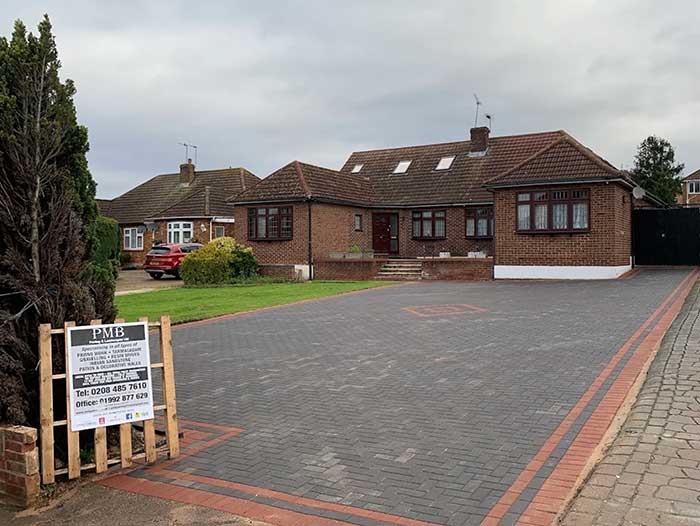
Palmers Green sits in the N13 postcode of north London, shaped by two waves of housebuilding. Streets along Aldermans Hill and Fox Lane were developed between 1901 and 1914, producing Edwardian semis with tiled porches, bay windows, and stained glass. Further south towards Broomfield Lane and east towards Hedge Lane, interwar builders added 1920s and 1930s semis with wider plots and simpler frontages. These properties define what good paving contractors in Palmers Green need to understand before they break ground on your front garden.
This guide covers the full project from first survey to final clean-up: how paving choices should reflect your property’s period, why groundwork on London Clay demands more care than many contractors offer, and how to vet a contractor so the finished result lasts decades rather than a few winters.
Matching Paving to Your Palmers Green Property
Architectural historian Nikolaus Pevsner described Palmers Green as a “poor man’s Muswell Hill,” referring to its Edwardian core surrounded by interwar estates. That variety matters for paving because different property types call for different design approaches.
Edwardian houses near the station typically have decorative tile paths, ornamental gate pillars, and low brick walls. The front gardens are often narrow but deep. Clay block paving or natural stone setts that echo the period brickwork, combined with a retained section of planting, will complement these houses far better than a flat slab of grey tarmac, and they protect kerb appeal at resale.
Interwar semis further south tend to have wider, squarer plots with simpler boundaries. Block paving, resin bound gravel, or a well-laid tarmac drive with cobble edging can all work well here. The key is proportioning the paved area to the garden so the property does not look like it has been converted into a car park.
Why Groundwork on London Clay Makes or Breaks Your Project
Palmers Green sits on London Clay, which swells when wet and shrinks when dry. This seasonal movement is the single biggest cause of cracked, sunken driveways across the area. Any paving contractor worth hiring will excavate to a minimum depth of 200mm, lay a geotextile membrane to stop clay migrating into the aggregate, and compact a layer of MOT Type 1 crushed stone to create a stable base.
If a contractor plans to lay blocks straight onto sand over clay, walk away. The saving up front will cost far more when the surface starts moving within two or three winters. Ask every contractor how they handle clay soil. Their answer tells you a great deal about their experience.
Planning Permission and the Five Square Metre Rule
Since October 2008, paving over more than five square metres of your front garden with an impermeable surface requires planning permission in England. This rule applies across Palmers Green regardless of your property type.
You can avoid the planning application in two ways. The first is to use a permeable surface: permeable block paving, porous tarmac, resin bound aggregate, or gravel all qualify. The second is to direct all rainwater runoff from the paved area into a soakaway, rain garden, or planted bed within your property boundary, so nothing drains onto the public highway.
Most good paving contractors in Palmers Green will design your project with permeable options as standard, both because it simplifies the process and because it makes practical sense on London Clay. Permeable surfaces let rainwater filter through gradually rather than sheeting off into already stretched storm drains.
Palmers Green itself is not covered by a conservation area, but nearby Southgate Green, Winchmore Hill, and Bush Hill Park have Article 4 directions that remove certain permitted development rights. Properties on the borders should check with Enfield Council before starting work.
Dropped Kerbs: The Step Most People Forget
If your front garden does not already have a vehicle crossover, you will need a dropped kerb before you can legally drive across the pavement. This is a separate process from planning permission and goes through Enfield Council’s highways department.
The council assesses whether the location is safe for a vehicle access, considering sightlines, proximity to junctions, street trees, and utility covers. Only council-approved contractors can carry out the physical kerb-lowering work, and the cost typically ranges from 800 to 2,500 pounds depending on the width and any utility adjustments needed.
Your paving contractor cannot install the dropped kerb themselves, but an experienced one will help you with the application and coordinate the timing so the kerb work and the paving happen in the right sequence. If a contractor tells you they can do the whole job including the kerb, that is a warning sign. The council will not accept kerb work carried out by an unapproved contractor, and you could face enforcement action.
Sustainable Drainage: What Enfield Council Expects
New hard surfaces should not increase the volume or speed of rainwater reaching the public drainage network. On a permeable surface, rainfall filters through the paving into the sub-base and gradually into the ground. For any impermeable sections, water needs to drain into a soakaway, rain garden, or planted area within your property. Practical solutions include linear drainage channels, French drains, or simply sloping the surface towards an existing border. These measures are inexpensive during the build but costly to retrofit. Make sure your contractor includes drainage in the design from the outset.
Surface Materials Compared for Palmers Green Front Gardens
Block paving remains the most popular choice. It comes in colours, patterns and finishes to suit Edwardian and interwar houses, with permeable versions available. Block paving can be lifted and relaid for future access to underground services. Suppliers such as Marshalls offer extensive residential ranges.
Resin bound surfacing uses natural aggregate mixed with clear resin, trowelled onto a prepared base. The result is smooth, permeable, and low-maintenance, with no loose stones. A good option where a contemporary look suits the property.
Tarmac is practical and cost-effective for larger driveways. Modern tarmac comes in red or buff tones as well as black, and works well with contrasting block or cobble edging. Porous tarmac options meet permeable drainage requirements.
Natural stone such as sandstone, granite setts, or porcelain offers a premium finish that can be stunning on a period property. Setts work particularly well for Edwardian houses, while sawn sandstone flags suit wider interwar frontages.
Gravel is the simplest, most affordable, and fully permeable option. It works best as a secondary surface alongside block paving rather than for regular vehicle use.
Combining Paving with Planting
Covering the entire front garden in hard surfacing looks stark, removes greenery from the streetscape, and maximises drainage problems. The Royal Horticultural Society recommends retaining planted areas wherever possible. A well-designed front garden combines a paved driveway with a planted border, raised bed, or retained tree. These green elements manage surface water, support wildlife, and maintain the leafy character that makes Palmers Green attractive. Good paving contractors offer combined landscaping and paving services so the whole scheme is designed as one.
What to Expect from a Professional Paving Project
A typical front garden project in Palmers Green follows these stages: a site visit and detailed written quotation; design agreement covering layout, materials, edging and drainage; excavation of the old surface down to the required depth; geotextile membrane and compacted MOT Type 1 sub-base; edge restraints and drainage channels; surface installation with the chosen material; and a full site clean-up with all waste removed. On London Clay, the excavation and sub-base stages are where quality contractors distinguish themselves from the rest.
How to Vet Paving Contractors in Palmers Green
The paving industry has a low barrier to entry, so not every company advertising in N13 has the standards to deliver lasting work. Ask for photographs of completed projects in Palmers Green or nearby areas. Check that the contractor holds public liability insurance and offers a written guarantee covering both materials and workmanship.
Ask about their groundwork process. A contractor who volunteers information about excavation depth, geotextile membranes, and sub-base compaction is likely one who takes the work seriously. Read reviews on independent platforms such as Google, Checkatrade, and TrustATrader. Be cautious of any contractor who asks for a large deposit up front or offers a significantly lower price than other quotes.
Why PMB Paving and Landscapes Is the Right Choice for Palmers Green
PMB Paving and Landscapes has built a strong reputation across Palmers Green, Southgate, Winchmore Hill, and the wider N13 area. The team understands London Clay and builds every project on properly excavated, membrane-lined, compacted sub-bases. PMB handles every stage in-house, from the initial free site visit through excavation, drainage, paving and landscaping, using quality materials from suppliers including Marshalls. The gallery shows the standard of finish you can expect.
Whether you want block paving for an Edwardian frontage, a resin bound driveway, or a combined driveway and patio with garden walls, PMB designs and builds the whole scheme to suit your property. PMB also serves Enfield, Woodford, Chigwell, and Harlow.
Maintaining Your New Paved Front Garden
Block paving needs regular sweeping and kiln-dried jointing sand topped up every year or two. Avoid high-pressure washing directly on the joints. Resin bound surfaces need only occasional sweeping and a wash with warm soapy water. Tarmac should be resealed every few years to protect against UV and fuel spills. For all surfaces, keep drainage channels clear of leaves and debris.
Common Mistakes to Avoid
The most common errors on Palmers Green driveways include insufficient excavation on clay soil, skipping the geotextile membrane, ignoring drainage, and choosing the cheapest contractor without checking their groundwork standards. Another frequent mistake is failing to apply for a dropped kerb before the paving is laid. Also avoid paving right up to the house walls: a gap of at least 150mm below the damp-proof course line prevents moisture bridging into the brickwork.
Frequently Asked Questions About Paving Contractors in Palmers Green
Do I need planning permission to pave my front garden in Palmers Green?
If you are paving more than five square metres of your front garden with an impermeable surface, you need planning permission from Enfield Council. You can avoid the application by using a permeable material such as permeable block paving, porous tarmac, or resin bound aggregate, or by directing rainwater runoff into a planted or gravel soakaway within your property boundary.
What is the best paving material for an Edwardian house in Palmers Green?
Clay block paving or natural stone such as sandstone and granite setts work well with Edwardian properties because they complement the period character of tiled porches and bay windows. Tumbled block paving from suppliers like Marshalls offers a traditional look with modern durability. Avoid plain grey concrete slabs, which can clash with ornate Edwardian frontages.
How long does a front garden paving project take in Palmers Green?
A typical front garden driveway or patio takes three to seven working days depending on the size, ground conditions and chosen material. Excavation and sub-base preparation usually take the first two days, with the surface laid over the remaining days. Larger projects that include drainage work, a dropped kerb or retaining walls may take up to two weeks.
How much does it cost to pave a front garden in Palmers Green?
Front garden paving in Palmers Green typically costs between 60 and 120 pounds per square metre depending on the material and groundwork needed. Block paving generally sits at 60 to 100 pounds per square metre, resin bound at 50 to 80 pounds per square metre, and natural stone at 80 to 120 pounds per square metre. A dropped kerb application and installation through Enfield Council adds around 800 to 2,500 pounds.
What is a dropped kerb and do I need one for my Palmers Green driveway?
A dropped kerb is a lowered section of pavement kerb that lets vehicles cross the footpath safely to reach your driveway. You need one if your front garden does not already have vehicle access. The application goes through Enfield Council’s highways department, not through planning permission, and only council-approved contractors can carry out the work. The council can refuse if your property is too close to a junction or visibility is poor.
Why does permeable paving matter for front gardens in Palmers Green?
Palmers Green sits on London Clay, which drains poorly and contributes to surface water flooding during heavy rain. When front gardens are paved with impermeable materials, rainwater that previously soaked into lawns and borders runs straight onto roads and into drains instead. Permeable paving lets water filter through the surface into the ground below, reducing flood risk and meeting Enfield Council’s sustainable drainage requirements.
Can I keep plants and greenery when paving my front garden?
Yes, and it is strongly recommended. Keeping planted borders, a tree, or raised beds alongside your paved area improves drainage, softens the streetscape, and can add value to your property. Many paving contractors in Palmers Green offer combined paving and landscaping services that integrate planting beds, low walls, and decorative gravel borders into the design.
What groundwork is needed before paving a front garden on London Clay?
London Clay holds water and shifts with the seasons, so proper groundwork is essential to prevent sinking and cracking. A reliable contractor will excavate to a depth of at least 200mm, lay a geotextile membrane to separate the clay from the sub-base, then compact a layer of MOT Type 1 aggregate before adding a sharp sand bedding layer and the finished surface. Skipping any of these steps on clay soil almost always leads to problems within a few years.
What questions should I ask a paving contractor before hiring them in Palmers Green?
Ask to see photos of completed projects in Palmers Green or nearby N13 streets. Check that they carry public liability insurance and offer a written guarantee. Ask how deep they excavate and whether they use a geotextile membrane, which is critical on London Clay. Confirm whether the quote covers waste removal, skip hire and any drainage work. Ask for references you can contact and check reviews on independent platforms such as Google, Checkatrade or TrustATrader.
When is the best time of year to have my front garden paved?
Spring through to early autumn is the ideal window for paving in Palmers Green. Warmer, drier weather helps the sub-base compact properly and allows jointing sand or resin to cure without interference from rain or frost. Winter installations are possible but may take longer and carry a higher risk of weather delays. Most paving contractors are busiest from April to September, so booking early in the year can help secure your preferred dates.
Get a Free Quote for Your Palmers Green Front Garden
If you are ready to transform your front garden, or simply want to explore your options, PMB Paving and Landscapes offers a free site visit and detailed written quotation with no obligation. The team will assess your property, advise on materials, planning and drainage, and give you a clear price for the complete project. Contact PMB today to book your free consultation, or visit pmbpavingandlandscapes.co.uk to see examples of completed work across Palmers Green and north London.