If you are planning a new driveway or patio in Palmers Green, choosing the right paving material and contractor can feel overwhelming. With clay soil conditions across much of N13, specific drainage rules from Enfield Council, and a mix of Victorian terraces and 1930s semis that each suit different styles, the decisions are more nuanced here than a generic guide will tell you.
This guide breaks down the most popular driveway materials for Palmers Green properties, what they cost in 2026, the planning and drainage rules you need to know, and how to find a contractor who delivers quality work on time and on budget.
What Makes Palmers Green Different for Driveway Projects
Palmers Green sits within the London Borough of Enfield in north London, and the area has some characteristics that directly affect paving and driveway work. The underlying soil is predominantly London Clay, which swells when saturated and contracts during dry summers. This seasonal movement means sub-base preparation is critical. A contractor who skips proper excavation and compaction on clay soil is setting you up for sinking, cracking or drainage problems within a few years.
The area also includes the Palmers Green Conservation Area, which covers parts of Alderman’s Hill and the streets around Broomfield Park. If your property falls within this zone, or near the Lakes Estate where Article 4 directions apply, you may need planning permission even for work that would normally be permitted development. It is always worth checking with Enfield Council before starting.
The mix of property types matters too. Edwardian and Victorian houses along Green Lanes and Hedge Lane often have chequered tile paths or mosaic entrances that homeowners want to complement rather than replace. Meanwhile, the 1930s semis on streets like Lakeside Road and Hazelwood Lane typically have wider front gardens better suited to a full driveway conversion with off-street parking.
Comparing Driveway Materials: Block Paving, Resin, Tarmac and More
Every material has trade-offs between cost, appearance, durability and maintenance. Here is an honest comparison based on current 2026 pricing for the Palmers Green area.
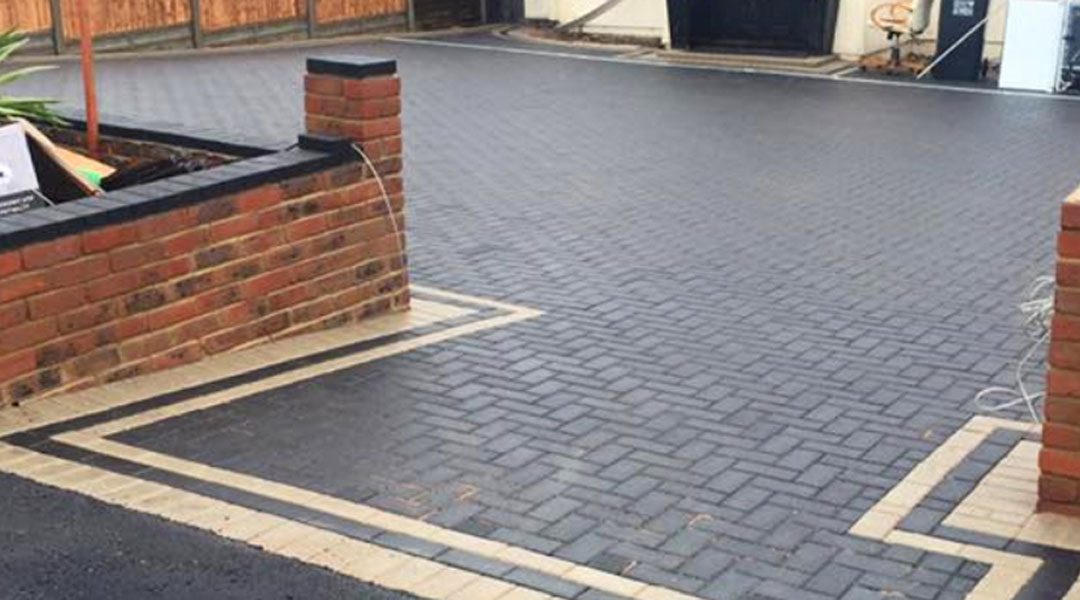
Block paving remains the most popular choice for residential driveways in north London. Individual concrete or clay blocks are laid in patterns such as herringbone, basketweave or stretcher bond over a compacted sub-base with kiln-dried sand joints. Costs range from £80 to £150 per square metre depending on the block quality and pattern complexity. The main advantages are design versatility, easy repair (you can lift and replace individual blocks) and excellent durability, typically 25 to 30 years. When laid with open joints or on a permeable system, block paving also satisfies SuDS drainage requirements without needing separate planning permission.
Resin bound aggregate has grown rapidly in popularity across Palmers Green and neighbouring Southgate. A blend of natural aggregate stones is mixed with clear UV-stable resin and trowelled onto a solid base to create a smooth, seamless surface. It is naturally permeable, weed-resistant and available in dozens of colour blends from warm golds to contemporary greys. Costs sit between £80 and £150 per square metre. Resin bound surfaces last around 15 to 25 years and suit modern or period properties equally well. The key limitation is that installation requires dry weather and temperatures above 5 degrees Celsius, making winter projects harder to schedule.
Natural stone, including Indian sandstone, granite setts and porcelain paving, delivers a premium finish. Indian sandstone flags cost from £80 to £120 per square metre and suit both traditional and contemporary designs. Porcelain paving, which is denser, stain-resistant and frost-proof, runs from £90 to £140 per square metre. These materials are popular for patios and front paths in Palmers Green, though they are less commonly used for full driveways due to the higher cost and the need for precise installation on a full mortar bed.
Tarmac is the most budget-friendly option for a functional driveway. At £40 to £70 per square metre, a standard 40 square metre tarmac driveway costs between £2,000 and £4,000 including groundwork. Installation is fast, often completed in a single day. The trade-off is aesthetics. Standard black tarmac does not complement period properties, though red or buff-coloured tarmac is available at a premium. Tarmac is not permeable unless you specify a porous grade, so a front driveway over 5 square metres may require planning permission or a drainage solution.
Gravel and shingle is the least expensive surface at £40 to £70 per square metre, and it is fully permeable, meaning no planning permission headaches. It works well for cottage-style properties and rural-feel front gardens. The downsides are that gravel migrates onto pavements, can be noisy underfoot and is less practical for regular vehicle use. A cellular grid system underneath helps stabilise the surface and reduces scatter.
Driveway Costs in Palmers Green: A Realistic Breakdown for 2026
The total cost of a new driveway goes beyond the surface material. Here is what a typical 40 to 50 square metre front driveway project involves in Palmers Green.
Groundwork, including excavation to a depth of 200 to 250mm, removal and disposal of spoil, and compaction of the sub-base, typically adds £30 to £50 per square metre. Edge restraints or kerbing cost £10 to £20 per linear metre. If you need a new dropped kerb from Enfield Council, budget an additional £800 to £2,200 including the council application fee and contractor’s work, with processing taking 4 to 8 weeks.
Drainage is another cost to factor in. If your chosen material is not permeable, you will need a soakaway, channel drain or other SuDS-compliant solution, adding £300 to £800 to the project. Most reputable contractors in the area include basic drainage in their quotation for non-permeable surfaces.
Putting it all together, here are realistic total costs for a 45 square metre driveway in Palmers Green in 2026. Gravel with edging runs from £2,500 to £4,500. Tarmac with proper sub-base costs £3,000 to £5,500. Block paving in a herringbone pattern sits between £5,500 and £9,000. Resin bound aggregate ranges from £5,000 to £8,500. Natural stone or porcelain commands £6,000 to £11,000.
These figures include groundwork, materials, labour, skip hire and basic drainage. They do not include the dropped kerb, which is a separate process with the council.
Planning Permission and Drainage Rules You Need to Know
Since 2008, UK regulations have required that any new impermeable driveway surface larger than 5 square metres draining onto a public highway needs planning permission. This rule, part of the Sustainable Drainage Systems (SuDS) framework, was introduced to reduce urban flooding, and it applies across the whole of the London Borough of Enfield.
The simplest way to avoid needing planning permission is to use a permeable surface. Block paving with open sand joints, resin bound aggregate, gravel and porous tarmac all qualify. Alternatively, if you direct water runoff to a planted border, rain garden or soakaway within your own property boundary rather than into the road, you also satisfy the requirement regardless of the surface material.
Properties within the Palmers Green Conservation Area face stricter rules. Permitted development rights may be restricted, meaning you could need full planning permission even for a permeable driveway. Check the Enfield Council planning portal or call their planning duty officer before committing to any work. The same applies to properties near listed buildings or those subject to Article 4 directions around the Lakes Estate.
A dropped kerb is a separate requirement. Driving across a full-height pavement kerb to access your driveway is illegal and can result in a fine. If your property does not already have a vehicle crossover, apply to Enfield Council’s highways department. The process takes 4 to 8 weeks, and many paving contractors will handle the application on your behalf as part of the project.
What to Expect During Installation: A Step-by-Step Timeline
Knowing what happens and when helps you plan around the disruption. A typical block paving driveway in Palmers Green follows this sequence.
Day one involves site clearance and excavation. The existing surface is broken up and removed by mini digger, and the ground is excavated to the required depth, usually 200 to 250mm below the finished level. Spoil is loaded into a skip. If the clay subgrade is soft, it may need extra compaction or a geotextile membrane.
Day two covers sub-base installation. MOT Type 1 crushed stone is laid in layers and compacted with a plate vibrator to create a stable, level foundation. On Palmers Green’s clay soil, a sub-base depth of at least 150mm is standard practice. Edge restraints or kerbing are set in concrete around the perimeter.
Days three and four are for laying the surface. Block paving is placed by hand in the chosen pattern, cut to fit around edges and obstacles, and compacted into the sharp sand bedding layer. Kiln-dried sand is swept into the joints and the surface receives a final compaction pass.
Day five, if needed, covers finishing touches: sealing joints, fitting drain covers, clearing the site and a final inspection with the homeowner.
Tarmac driveways are quicker, often finished in 1 to 2 days. Resin bound surfaces take 2 to 3 days but need an additional 24 hours of curing time before vehicle use. Natural stone projects can take 5 to 7 days due to the precision required for cutting and laying.
Maintaining Your Driveway to Protect Your Investment
A well-maintained driveway adds kerb appeal and property value. Block paving benefits from re-sanding joints every 2 to 3 years and occasional pressure washing to remove algae and moss. Avoid using a pressure washer at full power directly on the joints, as this blasts out the sand and encourages weed growth.
Resin bound surfaces need less upkeep. An annual wash with warm soapy water and a stiff broom keeps the surface clean. Avoid parking heavy vehicles in the same spot repeatedly, as this can cause indentation over time.
Tarmac driveways benefit from a sealant coat every 3 to 5 years to prevent oxidation and cracking. Oil stains should be cleaned promptly with a degreaser, as petroleum products break down tarmac binder.
For all driveway types, keep drainage channels and soakaways clear of leaves and debris. In Palmers Green, the mature street trees along roads like Hazelwood Lane and Fox Lane shed heavily in autumn, so a seasonal clear-out prevents waterlogging.
Matching Your Driveway to Palmers Green Property Styles
The streetscape matters. A driveway that looks right on a 1930s semi in Winchmore Hill might look out of place on an Edwardian terrace near Broomfield Park.
For Victorian and Edwardian properties, consider clay block paving in traditional red or brindle tones, or natural stone setts that echo the period character. Herringbone patterns in warm colours complement original brickwork and tiled paths. Avoid stark grey or white modern finishes that clash with the existing facade.
For 1930s and 1940s semis, the front garden is usually larger, offering more design scope. A combination of block paving for the parking area with planted borders retains some green space and meets SuDS requirements. Buff or charcoal block paving in a stretcher bond pattern suits the era well.
For modern properties and new builds, resin bound surfaces in a silver-grey or golden blend create a clean, contemporary look. Porcelain paving in large format tiles is another option for a sleek finish. These materials work particularly well where the property already has a minimalist or modern exterior.
Whatever your property type, keeping at least a portion of the front garden as soft landscaping, whether a planted border, a small lawn or a hedgerow, improves both drainage and street appeal. Enfield Council encourages this as part of its urban greening strategy, and it can make the difference between a characterful entrance and a featureless parking slab.
Why PMB Paving Is the Best Choice for Palmers Green Driveways
PMB Paving and Landscapes brings genuine local expertise to every driveway and patio project in Palmers Green and the surrounding N13 area. With years of experience working across north London, from Woodford and Chigwell to Harlow and Saffron Walden, the team understands the specific challenges of working with clay subsoils, period properties and Enfield’s planning requirements.
PMB offers a complete range of services including block paving, resin bound driveways, patios, landscaping, fencing, turfing and garden walls. This means your entire front or rear garden project can be handled by one team, avoiding the coordination headaches of multiple tradespeople.
Every project starts with a free, no-obligation site visit and written quotation. PMB sources materials from trusted suppliers such as Marshalls, and all work is backed by a written guarantee. The team takes pride in leaving every site clean and tidy, and you can see examples of completed projects in the PMB gallery.
Whether you need a straightforward driveway resurfacing, a complete front garden transformation with new paving, planting and fencing, or a rear patio and landscaping project, PMB Paving delivers craftsmanship that lasts. Get in touch for a free quote and see why homeowners across north London trust PMB with their outdoor spaces.
Frequently Asked Questions About Driveway Paving in Palmers Green
How much does a new driveway cost in Palmers Green?
Driveway costs in Palmers Green typically range from £40 per square metre for gravel or tarmac up to £150 per square metre for premium block paving or resin bound surfaces. A standard 40 to 50 square metre driveway costs between £1,500 and £8,500 depending on material, groundwork and drainage requirements.
Do I need planning permission for a driveway in Palmers Green?
You do not need planning permission if you use a permeable surface such as block paving with open joints, resin bound aggregate or gravel. If your front driveway exceeds 5 square metres and uses a non-permeable material that drains onto the public highway, you will need to apply to Enfield Council. Properties in the Palmers Green Conservation Area or near the Lakes Estate may face additional restrictions under Article 4 directions.
Which driveway material is best for Palmers Green’s clay soil?
Palmers Green sits on London Clay, which expands when wet and shrinks in dry spells. Block paving with a properly compacted MOT Type 1 sub-base of at least 150mm handles this movement well because individual blocks flex rather than crack. Resin bound surfaces on a solid base also perform well. Poured concrete is more prone to cracking on clay without reinforcement.
How long does it take to install a driveway in Palmers Green?
Most residential driveways in Palmers Green take 2 to 5 days from excavation to completion. A straightforward tarmac driveway can be finished in 1 to 2 days, while block paving or natural stone typically takes 3 to 5 days. Larger projects with drainage work, new edging or a dropped kerb application may extend the timeline to 7 to 10 days.
What is a dropped kerb and do I need one?
A dropped kerb is a lowered section of pavement kerb that allows vehicles to cross the footpath safely. If your property does not already have one, you must apply to Enfield Council for a vehicular crossover before parking on a new driveway. The application typically costs between £800 and £2,200, and processing takes 4 to 8 weeks.
What are SuDS requirements for driveways in Enfield?
Sustainable Drainage Systems (SuDS) requirements mean any new impermeable driveway surface over 5 square metres must include drainage that prevents rainwater running into the road. Options include permeable paving, soakaways, rain gardens or directing runoff to a planted border. These rules apply across the London Borough of Enfield, including Palmers Green, Southgate and Winchmore Hill.
Is block paving or resin bound better for a front driveway?
Block paving offers more design flexibility with patterns like herringbone and basketweave, suits period properties and is easier to repair by lifting individual blocks. Resin bound surfaces give a smooth, modern finish, are naturally permeable and require less weeding. Block paving costs £80 to £150 per square metre while resin bound runs £80 to £150 per square metre. The best choice depends on your property style and maintenance preference.
How do I choose a reliable paving contractor in Palmers Green?
Check for public liability insurance of at least £5 million, ask for recent local references and visit completed projects nearby if possible. A reputable contractor will provide a written quotation, never demand a large upfront deposit, and offer a workmanship guarantee of at least 5 years. Look for membership of trade bodies such as the British Association of Landscape Industries (BALI) or Marshalls Register.
Can I have my driveway installed in winter?
Block paving and gravel driveways can be installed year-round in Palmers Green, though contractors may pause during heavy frost or prolonged rain. Resin bound surfaces need dry conditions and temperatures above 5 degrees Celsius to cure properly, so installations between November and February may face delays. Tarmac can be laid in cooler weather but not during freezing conditions.
How long does a block paving driveway last?
A well-installed block paving driveway with proper sub-base preparation typically lasts 25 to 30 years or more. Regular maintenance such as re-sanding joints every 2 to 3 years and occasional pressure washing keeps it looking fresh. Resin bound driveways last around 15 to 25 years, while tarmac surfaces usually need resurfacing after 12 to 20 years.